
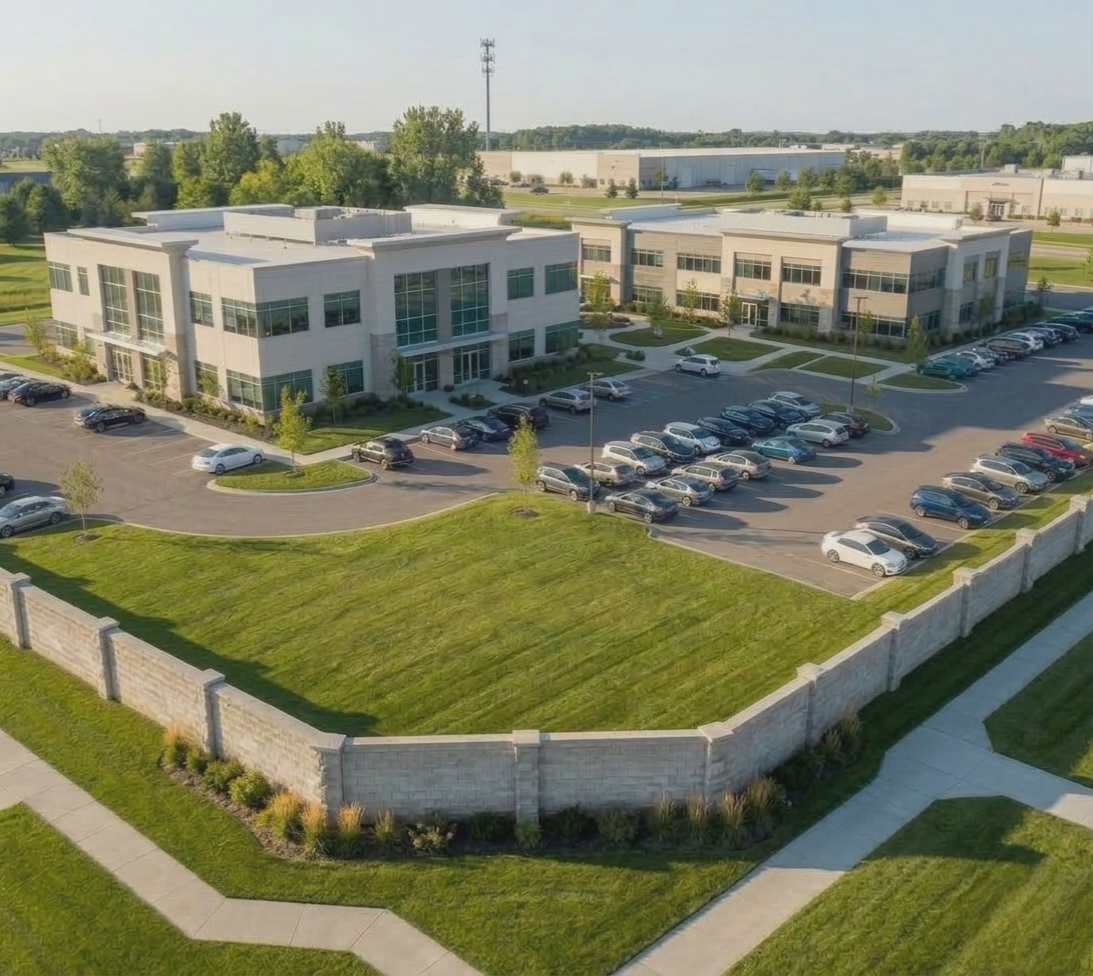
Precast Fencing Manufactured for Predictable Performance
Commercial construction projects operate under requirements related to schedule coordination, security, finish consistency, and long-term performance. Installation windows are often compressed, perimeter requirements are defined in project specifications, and finish quality must remain consistent across large commercial projects.
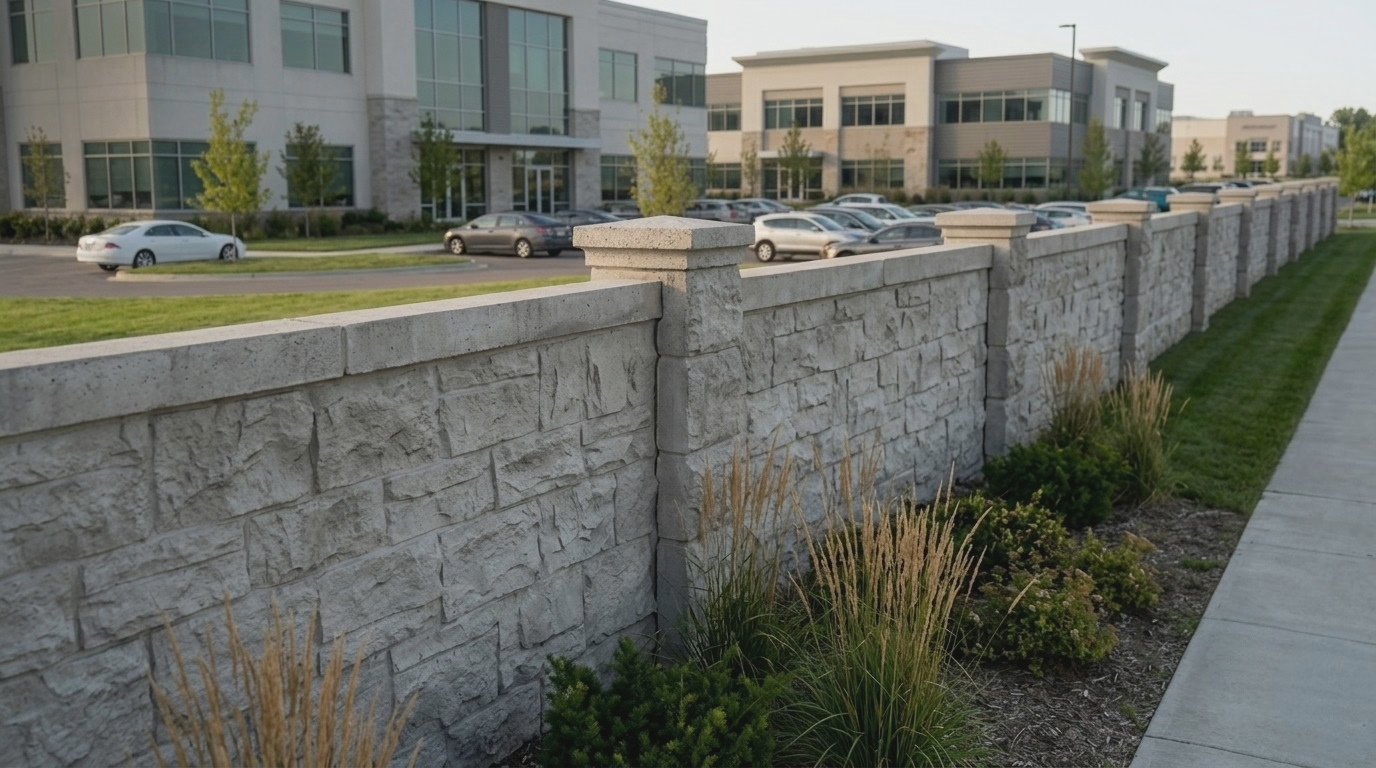
Field-built fence and wall systems can introduce installation variability related to weather exposure, workmanship consistency, and on-site construction conditions. Precast concrete fencing systems are produced in a controlled plant environment where material selection, reinforcement placement, dimensional tolerances, and curing conditions are managed before installation begins.
Every component is manufactured to defined specifications, inspected prior to shipment, and delivered as a coordinated wall assembly. For commercial project teams, this supports more predictable installation, dimensional consistency, and long-term performance across the completed system.
Commercial Applications
How Precast Concrete Fencing Systems Are Utilized in Commercial Construction
Precast concrete fence and wall systems serve a distinct set of functional requirements across different project types. The applications below represent the primary contexts in which precast concrete fencing systems are specified for commercial use, and the specific demands each application places on the wall system.

Commercial Project Boundary Walls
Office parks, retail centers, and mixed-use developments require boundary wall systems that maintain consistent appearance across large installations. Precast manufacturing supports dimensional accuracy and repeatable finish quality across phased commercial projects.
Commercial Security Perimeter Walls
Commercial security applications require wall systems that support perimeter definition, privacy, and controlled access requirements. Precast concrete wall systems provide solid construction and engineered configurations aligned with project specifications.
Commercial Privacy Walls and Screening Enclosures
Commercial projects often require visual screening for utility areas, loading docks, mechanical equipment, and outdoor service spaces. Precast panels offer privacy and finish consistency that integrates with surrounding site design.
Noise Reduction Walls for Commercial and Mixed-Use Sites
Commercial projects near transportation corridors or high-traffic areas may require sound reduction measures. Precast concrete panels support noise reduction requirements while maintaining finish consistency across the installation.
Multi-Tenant and Mixed-Use Development Boundary Systems
Large developments with phased construction schedules require consistent wall quality across multiple installation stages. Precast manufacturing delivers repeatable dimensions and finish consistency across production runs.
Commercial Entry Walls and Access Control Infrastructure
Entry points, gatehouse walls, and controlled-access areas require systems compatible with security hardware and vehicle access infrastructure. Precast wall systems are configured to support these project requirements.
Commercial Fencing Options
Duracrete vs. Permacrete: Choosing the Right System
Our precast concrete product families serve commercial fence and wall applications, each designed for different project scales and structural requirements. Both are manufactured under the same controlled plant conditions and in alignment with Precast/Prestressed Concrete Institute (PCI) and National Precast Concrete Association (NPCA) guidelines. The distinction between them is structural configuration and project scale, not manufacturing quality.
The table below identifies the primary differences between Duracrete and Permacrete to help guide system selection for commercial projects.
Manufacturing & Quality Control
Manufacturing Standards That Ensure Long-Lasting Performance for Commercial Projects
Commercial projects require wall systems that arrive on site performing to specification. That performance is not achieved through field adjustment. It is built into the production process before a panel is shipped. Every component is produced under defined process controls that govern material inputs, reinforcement placement, dimensional tolerances, and curing conditions. These controls are applied consistently across every production run.
Manufacturing aligns with Precast/Prestressed Concrete Institute (PCI) and National Precast Concrete Association (NPCA) guidelines, with materials sourced and tested to ASTM International specifications. Compliance with these standards provides the documented manufacturing basis that commercial project specifications and municipal submittals require.
Steel reinforcement placement is inspected prior to casting to confirm that cage geometry, bar sizing, and cover dimensions meet structural design requirements. This inspection ensures each panel performs as an engineered structural component under the load conditions defined for the project
All components are cured under monitored conditions that support predictable strength development and uniform surface quality. Controlled curing eliminates the variability introduced by field curing under Gulf Coast heat and humidity, where inconsistent curing conditions are a common source of surface and structural performance issues in site-built systems
Forming systems are designed and maintained to produce panels and columns within defined dimensional tolerances. For commercial wall installations spanning large perimeters, dimensional consistency at the panel level is what prevents alignment errors from accumulating across the full wall run.
Every panel and column is reviewed for dimensional accuracy, surface quality, and structural integrity before shipment. Components that do not meet production specifications are identified and resolved before reaching the commercial job site, not after installation has begun.
Batch records, material certifications, and production documentation provide full traceability from raw material through finished components. For commercial projects, this documentation supports specification compliance verification, municipal permitting submittals, and long-term asset warranty management.
How Precast Compares
Precast Concrete vs. Traditional Commercial Fencing Materials
Commercial fence and wall systems must perform consistently across installation, long-term durability, maintenance exposure, and visual appearance. Compared to traditional materials such as field-built masonry, precast concrete systems provide greater consistency, predictable and more efficient installation, and lower long-term maintenance requirements.
Precast concrete addresses each of these risks at the production level. The table below compares precast concrete against the fence and wall systems most commonly specified for commercial applications, across the performance factors that matter most on commercial projects.
For commercial developers, general contractors, and facility managers specifying fence and wall systems against defined project requirements, precast concrete produces a more dimensionally consistent product at installation, performs more reliably across the service life of the system, and reduces lifecycle cost exposure compared to the field-built alternatives it replaces.
Why Choose American Precast Walls
The Smarter Choice for Precast Commercial Fencing Projects
American Precast Walls is a Houston-area precast concrete fence and wall manufacturing company built on a disciplined manufacturing model. Every commercial fence and wall system we produce is engineered, manufactured, and delivered from a controlled plant environment where process controls, material accountability, and production traceability are built into every stage.
For commercial developers, general contractors, and facility managers, our manufacturing discipline translates into outcomes that directly affect project performance, installation predictability, and long-term system reliability.
Structural requirements, footing design, panel configuration, and installation sequencing are incorporated into manufacturing before production begins. Every commercial wall system we deliver is engineered for the specific site conditions and load requirements of the project.
Our process controls and documented quality standards ensure dimensional accuracy, structural compliance, and surface quality are verified on every panel, across every production run, regardless of where in the project timeline that run falls.
We manufacture commercial fence and wall systems specifically for the conditions in which they will perform. Our concrete mix designs, curing protocols, and column footing engineering are developed for the heat, humidity, storm exposure, and soil conditions specific to the Greater Houston area and Gulf Coast region.
Every component we deliver arrives dimensionally consistent and ready to set. Alignment corrections and field rework common in site-built masonry systems are resolved at our production level, not managed on the commercial job site.
We maintain production documentation, material certifications, and compliance records for every project, supporting municipal permitting, specification compliance verification, and asset management documentation requirements throughout the project lifecycle.
Every system we manufacture is produced to a defined specification and backed by full production documentation. If a panel does not meet our standards, it does not leave our facility.
Frequently Asked Questions
Interested in Precast for Your Next Commercial Project?
If your commercial project requires precast fencing systems for privacy, perimeter definition, security, or screening, American Precast Walls works directly with project teams to deliver solutions aligned with site conditions, performance requirements, and project specifications.
Connect with our team to discuss the right precast system for your commercial application.